You finish dinner on a quiet rooftop in a Himalayan village. The air is cool, the lights are few. You look up and see a river of stars stretching across the sky, slow and shining. In that moment, your mind becomes light. The buzz of city traffic and the glow of digital screens feel far away. This moment is timeless. This is Nepal. And this is Astrotourism.
Introduction to Astrotourism
Astrotourism means traveling to dark, quiet places to experience the sky in its raw, sacred form. It’s more than just astronomy. It’s a blend of science and spirit. In Nepal, where the stars have guided sages, farmers, and pilgrims for centuries, this experience runs deep. The high Himalayan air, the rhythm of lunar festivals, and the storytelling tradition all contribute to a unique stargazing journey. Ancient temples like Pashupatinath and Bajrayogini are aligned to the cardinal directions, echoing cosmic geometry. The sky here is not just a view it is a memory keeper.
Common Activities in Nepali Astrotourism
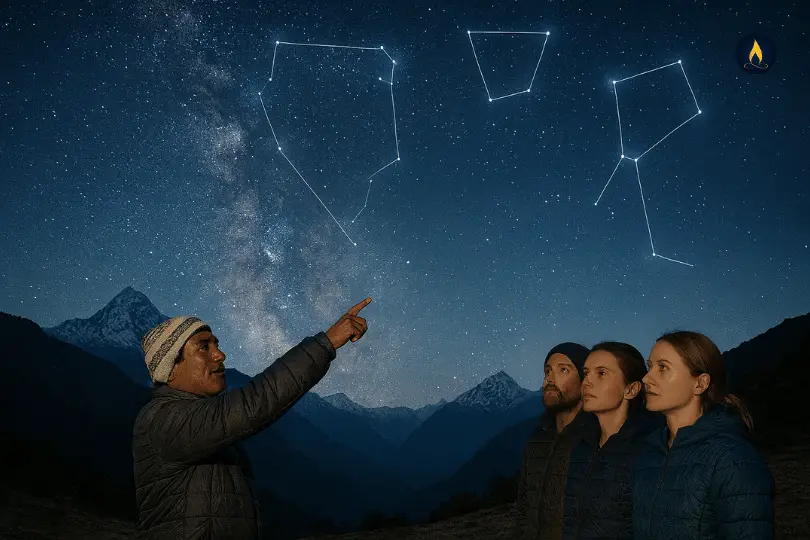
Travelers in Nepal can expect a wide range of cosmic experiences. Stargazing with local guides or telescopes is often paired with stories of Dhruva (the Pole Star) or the seven sages of the Saptarishi constellation. Basic astronomy sessions are held in villages and eco-lodges, introducing guests to night sky navigation. Yoga and pranayama under open skies are followed by silent meditations that bring calmness and clarity. Nakshatra stories and Vedic astrology (Jyotish) sessions invite reflection on one’s inner universe, while chanting, moon bathing, and mindful forest walks offer grounding rituals. Evenings often close with shared tea, fireside storytelling, and the slow hum of the stars above.
Why People Are Turning to the Stars
Today, more people than ever are feeling called to the stars. As bright city lights obscure (un clear) the Milky Way, travelers long to reconnect with the universe’s raw beauty. The endless scroll of screens and constant notifications have created fatigue, while the silent vastness of a Himalayan night offers deep relief. Curiosity about space and a hunger for inner peace often travel hand in hand. What once required large telescopes is now accessible with small binoculars and mobile apps. This makes astrotourism a welcoming space for families, solo seekers, students, and elders alike, where learning meets healing under a shared sky.
What Travelers Seek in Nepal
Nepal offers both scientific wonder and spiritual stillness. In astronomy-rich destinations like Mustang, Rara, Langtang, and Gosaikunda, visitors encounter crystal-clear night skies untouched by pollution. Through telescopes, they see Saturn’s rings and Jupiter’s moons, and with guidance, they trace constellations like Orion and Dhruva. Sunrise yoga in Nagarkot or lakeside meditation at Rara brings a deeper connection to the rhythms of the Earth. Jyotish storytelling how Nakshatras guide planting, rituals, and birth charts makes the cosmic personal. Rituals like surya arghya (sun water offering) at dawn or walking in silence under a full moon help travelers attune to nature’s cycles. Comfort is not forgotten: eco-lodges, warm food, local blankets, and quiet, star-filled courtyards enhance the experience.
East Meets West
In the West, astrotourism is often rooted in national parks and observatories with controlled light zones. In Nepal and much of the East, stars are part of daily life and spiritual tradition. In Mustang, the dry climate and wide valleys offer desert-like clarity, while the local Bon and Buddhist myths are filled with star symbolism. Langtang’s glacial lakes mirror the Milky Way, creating sacred reflections. In Kathmandu, ancient temples like Pashupatinath and Bajrayogini are designed according to cosmic directions, linking architecture to the heavens. And in hill villages, elders still tell stories of Saptarishi and lunar fasting days. In Nepal, the sky is not only for scientists it is for seekers.
Protecting the Sacred Sky
Astrotourism in Nepal thrives when darkness is protected. Using warm or red lights ensures stargazing is undisturbed and wildlife remains calm. Drones and loud music are discouraged in sacred and natural zones. Travelers are encouraged to support solar-powered homestays, respect local customs, and practice leave-no-trace principles. Planting trees, reducing waste, and adjusting travel to wildlife rhythms all help maintain the sanctity(Holiness) of the sky. As interest grows, it’s vital to remember that the night is a heritage to be preserved, not consumed.
Cultural and Economic Harmony
Astrotourism has the power to uplift communities. In remote villages, it creates jobs sky guides, cooks, drivers, and homestay hosts. Women and youth lead sunrise yoga, herbal tea houses, and traditional crafts, bringing new life to old skills. Off-season travel for meteor showers or moon rituals offers fair income when tourism is slow. School sky clubs introduce astronomy to children, sparking dreams and cultural pride. Reviving Jyotish, moon-fast days, and constellation tales adds depth to the local identity. When travelers engage meaningfully, astrotourism becomes a cycle of sharing and renewal.
The Future of Nepalese Astrotourism
Looking ahead, Nepal envisions dark-sky parks and astro-villages places where telescopes, tea houses, and terraced lodges create harmonious sky sanctuaries. Monthly community stargazing nights could foster deeper cultural exchange. Astro-retreats might offer yoga, journaling, and sleep health programs under constellations. Astro-agriculture tours would let travelers learn how planting aligns with lunar phases. These developments, led by organizations like NASO and local communities, will protect the skies while supporting grassroots economies. The future is bright, if we keep it dark.
Join Us on Tiktok and Instagram Now.
FAQs
What Comes Under Astro Tourism ?
Astro Tourism includes stargazing, Nakshatra storytelling, Jyotish learning, yoga under the stars, meditation, and sky watching in dark and peaceful places.
What are the benefits of astrotourism?
The benefits are peace of mind, better sleep, spiritual healing, knowledge of stars and planets, and support to local culture and economy.
Which countries are the best for astrotourism?
Countries like Nepal, India, Chile, New Zealand, and Iceland are best for Astro Tourism because they offer clear skies, cultural meaning, and natural beauty.