Uttarayan marks a sacred solar transition when the Sun begins its northward journey, symbolizing the return of light, growth, and positive energy. Deeply rooted in Vedic astrology and Hindu tradition, this phase, celebrated as Makara Sankranti, holds great spiritual and astrological importance. In this guide, you’ll learn its meaning, 2026 dates, significance, rituals, and scriptural relevance in a clear and simple way.
What is Uttarayan? Sun’s Journey & Vedic Meaning
Uttarayan refers to the auspicious six-month phase when the Sun begins its northward journey (Dakshinayan to Uttarayan transition) according to Vedic astrology. This movement starts when the Sun enters the zodiac sign Makara (Capricorn), marking the sacred festival of Makara Sankranti.
In Sanskrit:
- Uttara = North
- Ayana = Movement
So, Uttarayan means “the Sun’s movement toward the north.”
Vedic Significance of Sun’s Northward Journey
In Vedic scriptures, the Sun symbolizes:
- Soul (Atma)
- Consciousness
- Vital life energy
When the Sun moves northward, it is believed that positive cosmic energy increases on Earth, supporting:
- Spiritual growth
- Mental clarity
- Auspicious beginnings
This is why Uttarayan is considered highly favorable for spiritual practices, charity, and new ventures.
Uttarayan 2026: Exact Date, Time & Auspicious Muhurat
Uttarayan 2026 Date
Astronomical start: 21st December 2025 (winter solstice)
Traditional & festival observance: 14 January 2026 (Makara Sankranti)
Exact Sun Transit Timing (Makara Sankranti)
- Sun enters Capricorn: Around midday (exact time varies slightly by location)
In Vedic astrology, the Sun’s entry into Capricorn is the true beginning of Uttarayan.That is why, this day is celebrated as Makar Sankranti.
Auspicious Muhurat on Uttarayan 2026
- Punya Kaal: From Sun’s transit time for approximately 16 hours
- Maha Punya Kaal: First few hours after the transit
These periods are considered ideal for:
- Charity and donations
- Religious rituals
- Mantra chanting
- Starting auspicious activities
Significance of Uttarayan
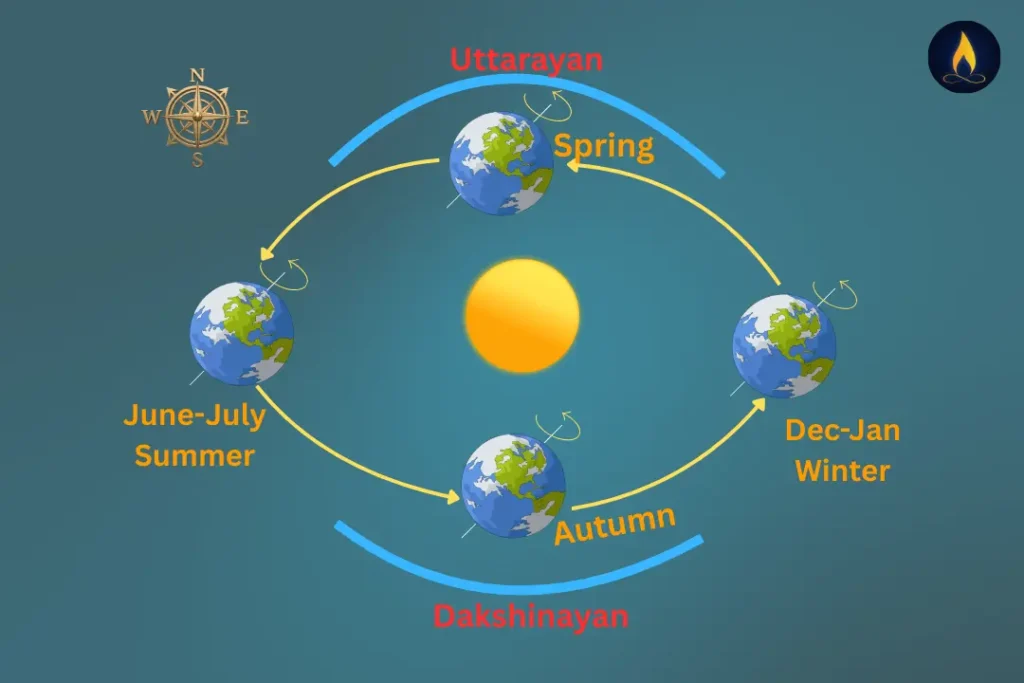
The importance of this sacred phase lies in the Sun’s gradual movement toward the north, symbolizing the return of light, warmth, and vitality in nature. As days slowly become longer, this period marks the end of harsh winter conditions and the beginning of renewal and growth. In astrology, the Sun represents the soul, consciousness, and inner strength, and its northward movement is believed to enhance clarity, optimism, and purposeful action.
Spiritually, ancient scriptures describe this phase as the path of light, associated with higher knowledge and liberation. Practices such as charity, meditation, and self-discipline performed during this time are believed to reduce negative karmic influences and accelerate spiritual progress, making it a deeply sacred period beyond its seasonal importance.
Bhishma Pitamah, Uttarayan & Reference in the Bhagavad Gita
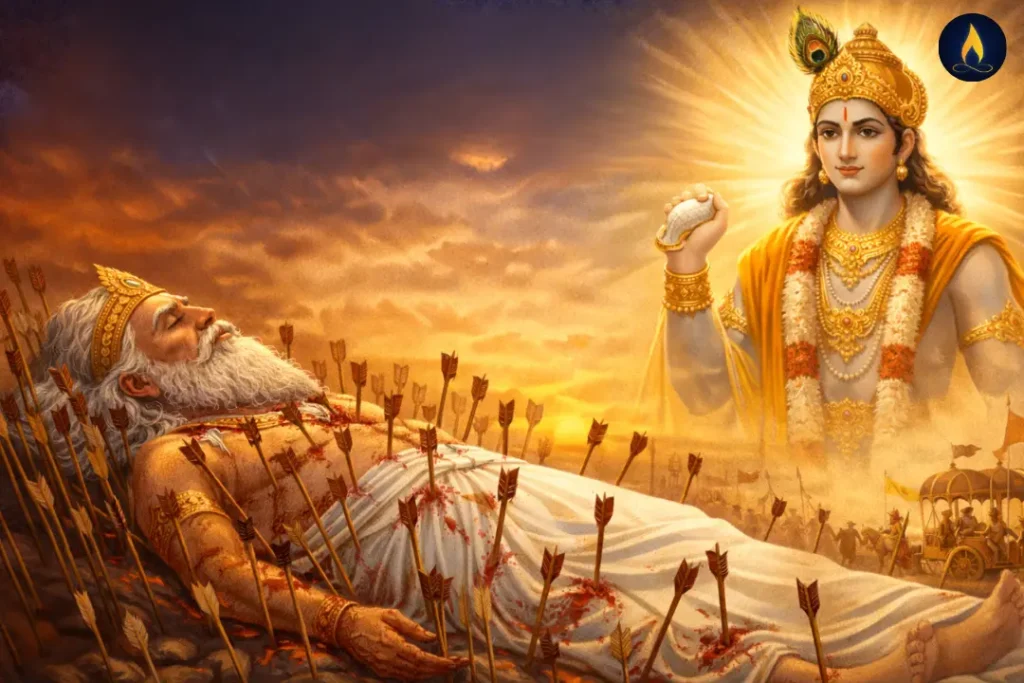
According to the Mahabharata, Bhishma Pitamah remained on the bed of arrows after falling on the tenth day of the Kurukshetra war, choosing to wait approximately 58 days, not 98 as commonly misunderstood, for the beginning of the Sun’s northward journey. Blessed with Ichha Mrityu (the power to choose the time of death), he consciously delayed leaving his body until this auspicious solar phase began.
This belief is clearly explained by Lord Krishna in the Bhagavad Gita (Chapter 8, Verses 23–26), where two cosmic paths are described.
Sanskrit Shloka:
अग्निर्ज्योतिरहः शुक्लः षण्मासा उत्तरायणम् ।
तत्र प्रयाता गच्छन्ति ब्रह्म ब्रह्मविदो जनाः ॥
Meaning (Simple):
Those who depart during the time of light, daytime, the bright lunar phase, and the Sun’s northward movement, attain the Supreme state.
Here, the path of light leads to liberation (moksha), while the southern path leads to rebirth. Bhishma Pitamah’s decision stands as a living example of this timeless Vedic wisdom.
Astrological Effects of Uttarayan on All Rashis
The Sun’s northward movement generally brings positive and progressive energy to all zodiac signs. This phase supports personal growth, improved decision-making, and forward momentum in areas such as career, education, and health. Astrologically, it strengthens the Sun’s influence in the horoscope, enhancing confidence, discipline, and leadership qualities.
While the exact results vary from one Rashi to another based on individual birth charts, this period is widely regarded as favorable for long-term planning, self-improvement, and spiritual awareness.
Important Rituals to Follow in Uttarayan 2026
Following the right rituals during this period helps align personal energy with cosmic forces.
- Holy Bath: Take a bath in the morning, preferably with sesame seeds
- Surya Puja: Offer water to the Sun while chanting Gayatri Mantra
- Charity (Daan): Donate:
- Sesame seeds (Til)
- Jaggery
- Warm clothes
- Food grains
- Fasting: Observing a light fast purifies body and mind
- Spiritual Practices: Meditation, yoga, and mantra chanting
Astrological Tip: Donations made during Uttarayan are believed to multiply in karmic merit.
Stay Connected with Astro Parasar — All Our Links in One Place
FAQs
What is the meaning of Uttarayan in astrology?
It marks the phase when the Sun moves northward, symbolizing growth, positivity, and spiritual awakening.
Is Makara Sankranti and Uttarayan the same?
Makara Sankranti marks the beginning of Sun’s northward journey and the start of this sacred phase.
Is Uttarayan 2026 auspicious?
Yes, this period is considered highly favorable for charity, spiritual practices, and new beginnings.
Why is charity important in Uttarayan?
Charity during is believed to bring long-lasting prosperity and karmic purification.
Can we start new work during Uttarayan?
Yes, this phase is considered favorable for new ventures, education, and spiritual commitments.